

The Best 25 Photoshoot Spots in Gran Canaria (And When to Shoot Them)

I created a list of the best 25 photoshoot spots in gran canaria that you must see!
After living on the island for over 11 years, I discovered that Gran Canaria has many "must see" places that not many people know about.
Everyone photographs Gran Canaria, but knowing where and when is KEY.
The difference usually isn't the camera. It's the hour. This island has a habit of looking ordinary at midday and extraordinary an hour before sunset — and knowing which is which, for which location, is most of the job.
Here's where to go, and when.
Maspalomas dunes — 6:30 to 8pm
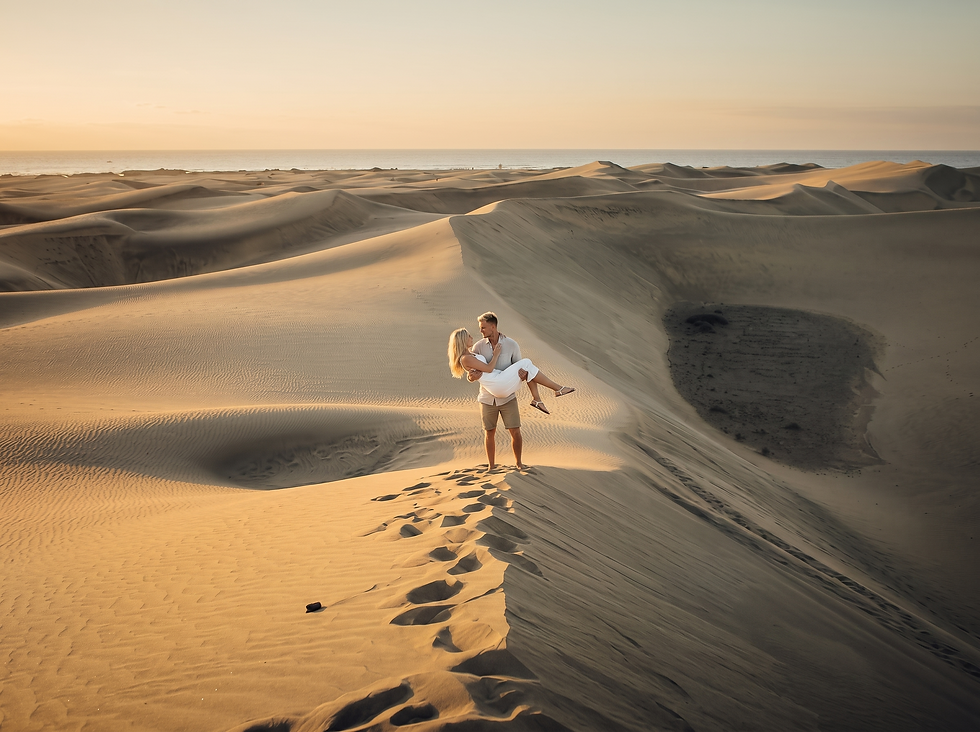
The dunes are the island's most photographed location for a reason: golden hour turns the sand into something that barely looks real. Go any earlier and you're fighting flat light and crowds. Go at 7, and you'll have shadows long enough to shape the whole frame.
Puerto de Mogán — late afternoon, any season

The "Venice of the Canaries" works at almost any time, but the boats, the flowers, and the pastel buildings all soften beautifully once the afternoon sun angles low across the harbour.
Mirador del Balcón — clear mornings

This cliffside viewpoint over the Atlantic needs visibility more than it needs golden light. Go on a clear morning before the haze rolls in, and the Dragon's Tail rock formation stretches out beneath you in full detail.
Roque Nublo — sunrise

The hike is worth it once, and sunrise is the only time to do it — the light hits the rock face directly, and you'll have the trail mostly to yourself before the tour groups arrive.
Los Azulejos — midday, unusually
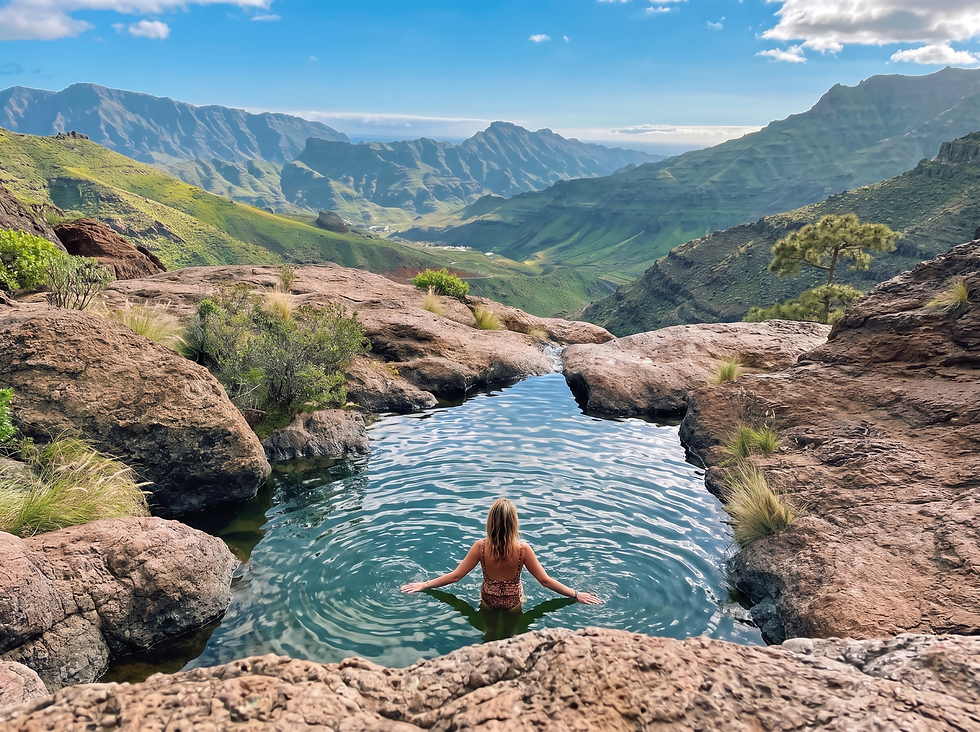
One of the rare spots where midday works in your favour. The full sun brings out the reds, greens, and ochres in the mineral-streaked rock face.
If you're visiting Gran Canaria and want more than a phone photo taken by a stranger on the beach, I run vacation photoshoots at exactly these locations, timed to the light. Sessions from one hour, edited gallery within 48 hours.
Arco del Elefante — late afternoon

A volcanic rock arch near Mogán shaped like an elephant's head, sitting on a clifftop with the Atlantic behind it. Almost no foot traffic. Best photographed from below looking up, an hour or so before sunset when the rock face catches warm light.
Tufia — golden hour

A whitewashed fishing village on the east coast, houses packed tightly against volcanic rock, right at the water's edge. It photographs like a film set and most visitors to the island have never heard of it.
Charco de las Espejos — early morning, dead calm

Tidal pools near Punta Sardina that mirror the lighthouse on still water. This one is weather-dependent — needs a calm sea for the reflection to work — but when it does, it's one of the most striking images on the island. Known almost exclusively to locals.
Artenara / Balcón de Unamuno — sunrise

The highest village on Gran Canaria, at 1,270m. On the right morning you get a full cloud inversion — the village sitting above a sea of clouds, with Roque Bentayga and Roque Nublo rising through it. Very few tourists make the drive up.
La Aldea de San Nicolás — late afternoon

A quiet village tucked beneath cliffs, backing onto a black sand beach. Whitewashed houses against dark volcanic rock and green terraces — a strong contrast palette that most of the island doesn't have.
Barranco de las Vacas — midday (rare exception)

A striated rock valley between Agüimes and Temisas, carved by centuries of erosion into ochre and rust-coloured layers. Still growing on Instagram but rarely appears in mainstream guides — one of the few locations here where full midday sun actually helps, since it brings out the colour banding.
A note on logistics: Playa de Güigüi and some of the Artenara viewpoints require a real hike or careful timing to reach — worth flagging in the post itself so readers know which spots are a five-minute stop and which need half a day.
Pico de las Nieves — sunrise
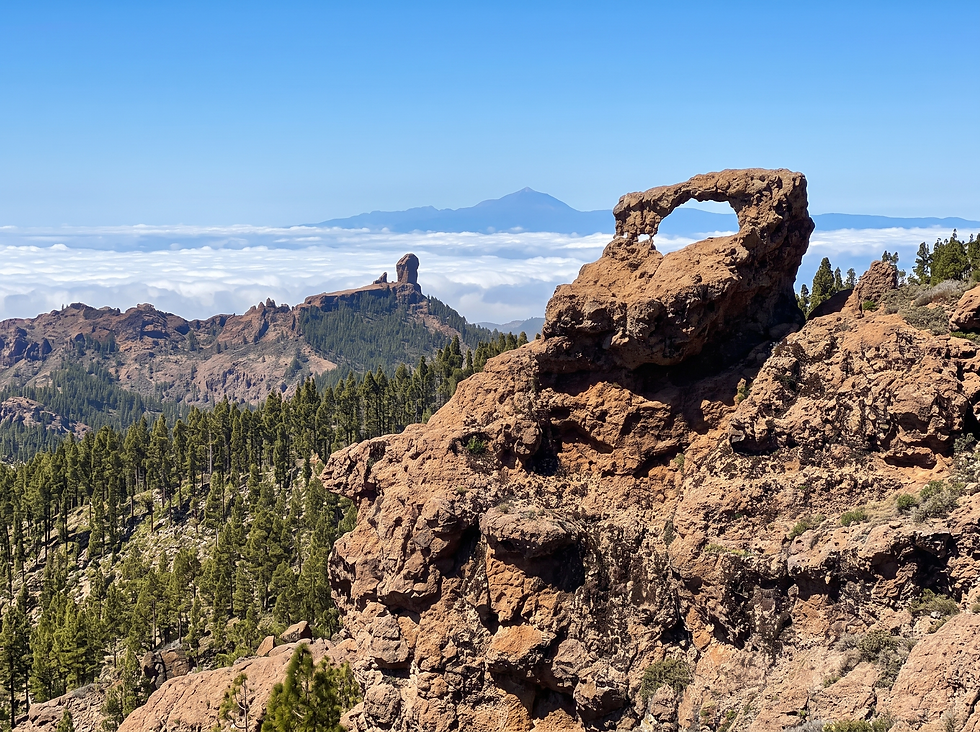
The highest point on the island at 1,949m, roughly a 45-minute drive from Maspalomas or an hour from Las Palmas, up through Fataga and San Bartolomé de Tirajana. On a clear morning you can see across to Tenerife's Mount Teide. The real draw is the cloud inversion — arrive at sunrise and you'll often be standing above a full sea of clouds, with only the peaks of the island breaking through. It gets genuinely cold up here even in summer, so bring a layer. Free to visit, no set opening hours, small parking area at the summit.
Mirador de Cruz de Tejeda — early morning or last hour before sunset

Considered the geographic centre of the island — from here, old pilgrim paths once radiated out to every parish. The viewpoint gives you Roque Nublo and Roque Bentayga in the same frame, which very few spots on the island manage. There's a parador (hotel) right at the viewpoint with a café, so it's an easy stop to combine with breakfast or lunch. Midday tends to wash out the layered mountain views that make this spot worth the drive.
Tejeda — late afternoon

A whitewashed village about 90 minutes from Maspalomas, voted one of the prettiest towns in Spain. Worth timing your visit around almond blossom season (late January to February) if you can — the whole valley turns white and pink. The village itself is small enough to walk in 30–40 minutes, with a good local market for honey and almond sweets (bienmesabe) on weekends. Combine with Cruz de Tejeda, ten minutes up the road.
Mirador Degollada de Becerra — sunset

A quieter alternative to Cruz de Tejeda, a short drive further along the same ridge road. Same dramatic sightline to Roque Bentayga and Roque Nublo, but far fewer visitors — most tour buses stop at Cruz de Tejeda and skip this one entirely. No facilities, just a roadside pull-in and a viewing platform, so bring water.
Amadores — early morning or last hour before sunset

A man-made but genuinely beautiful crescent beach in the south, about 15 minutes from Puerto Rico and 25 minutes from Maspalomas. Calm, shallow, turquoise water — better for swimming with children than most of the wilder beaches further north. Free beach access, but sunbeds and parasols are paid. Gets busy by late morning in high season, so go right at opening or in the last hour of light if you want it uncrowded.
Agüimes — late afternoon
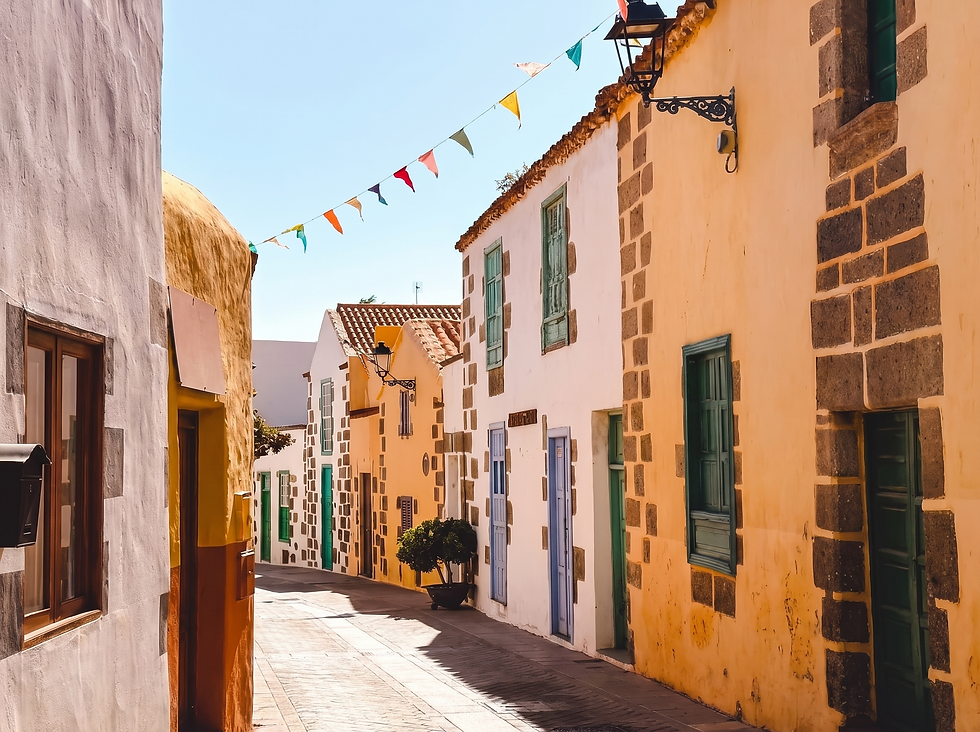
A well-preserved old town in the southeast, about 30 minutes from Maspalomas, with narrow stone streets and colonial-era buildings that feel closer to mainland Andalusia than the rest of the island. Pair it with the Barranco de Guayadeque, a ravine a few minutes away where people still live in cave houses, several of which have been converted into cave restaurants serving traditional Canarian food. A good half-day combination.
Teror — morning

A historic town in the centre-north, about 40 minutes from Las Palmas, built around the Basilica de Nuestra Señora del Pino — the island's patron saint. The main square, with its dark wood balconies and cobbled streets, is one of the most photogenic town centres on the island, and largely overlooked by south-coast tourists. Sunday mornings bring a large local market selling cheese, honey, and produce — worth timing a visit around if you want the town at its liveliest.
Cathedral of Arucas — late afternoon
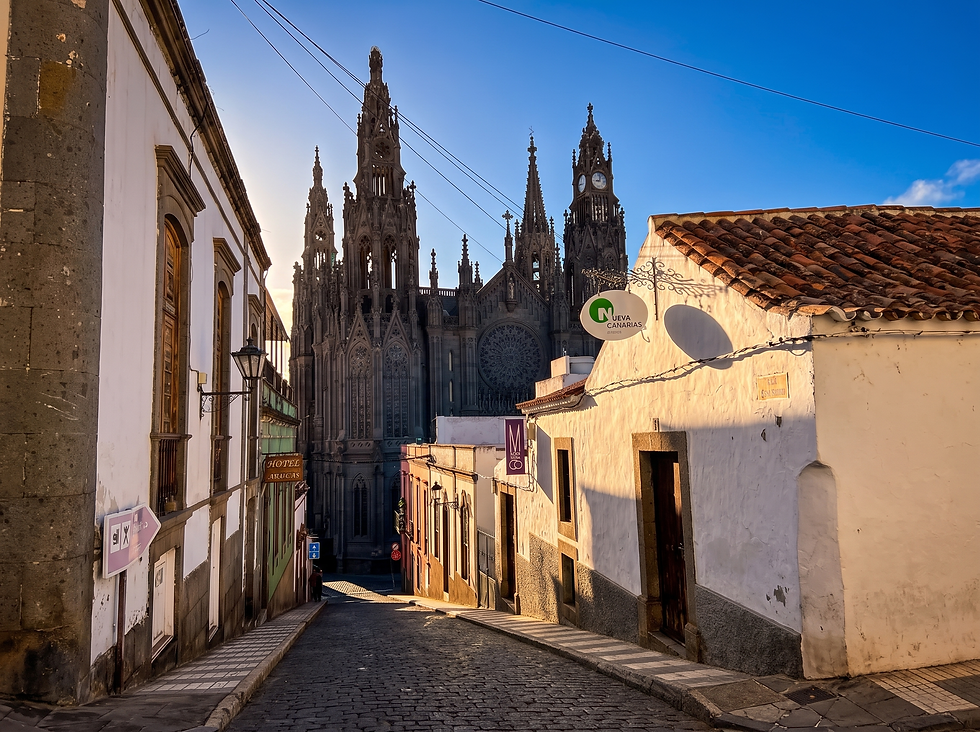
Technically a parish church, not a cathedral, but built at cathedral scale from volcanic stone — neo-Gothic, ornately carved, and took roughly 70 years to complete. About 20 minutes from Las Palmas. Free entry, and the interior stained glass is worth the five minutes it takes to see. Combine with a walk through Arucas's old town and, if you have time, the Arehucas rum distillery nearby, one of the oldest in Spain.
Paseo de Canarias, Firgas — daytime

A cascading, mural-lined street in the town of Firgas built as a tribute to all seven Canary Islands — mosaic murals, small waterfalls, and carved stone plaques tracing local history. About 35 minutes from Las Palmas. Genuinely unlike anything else on the island and easy to combine with Arucas and Teror in a single loop through the north. Free, open-air, no set hours.
Agaete / Puerto de las Nieves — sunset

A fishing village on the northwest coast with natural volcanic pools, dramatic cliffs, and some of the best sunset views on the island — the sun drops directly behind the Roque de Fataga rock formation offshore. The valley behind it has Europe's only coffee plantations, thanks to a unique microclimate; a few offer short tours. About an hour from Maspalomas, worth the drive specifically for golden hour. Decent seafood restaurants right on the harbour if you want to make an evening of it.
Cenobio de Valerón — morning

An archaeological site near Santa María de Guía in the north — over 300 grain-storage caves carved into a cliff face roughly 800 years ago by the island's original Guanche inhabitants. Small entrance fee, guided visits available, and it takes about 45 minutes to see properly. Quiet even in high season since it sits off the main tourist routes. The cliff face is shaded by early afternoon, so morning light works best.
Vegueta — morning

The historic old quarter of Las Palmas de Gran Canaria, about 45 minutes from Maspalomas. Cobbled streets, colonial architecture, and Casa de Colón — the house where Christopher Columbus is said to have stayed before crossing the Atlantic. Best explored on foot before the heat sets in; many of the museums here offer free entry on Sundays. Easy to combine with nearby Triana, the city's main shopping street.
Caldera de Bandama — morning

A volcanic crater roughly 20 minutes from Las Palmas, formed around 5,000 years ago — 216 metres deep and over a kilometre across. You can walk the rim in about an hour for sweeping views over the north of the island, or take a steeper path down into the crater floor itself, which takes closer to two hours round trip and proper shoes. The rim walk is free and requires no real fitness; the descent is a genuine hike. Best before the heat and haze build up over the island's interior.
Anfi del Mar — early morning or last hour before sunset

A private, palm-lined beach in the south, roughly 20 minutes from Maspalomas and 10 from Puerto Rico. Calm, clear water and imported white sand give it a Caribbean look that's rare on this side of the island — often mentioned in the same breath as Amadores for that reason. Free public beach access along most of the shoreline, though the resort above it is private. Sunbeds and parasols are paid, and it fills up fast in high season. Good option to pair with Puerto Rico's marina, a five-minute drive away, if you want a beach-plus-harbour half day.
Now you know about the best 25 photoshoot spots in gran canaria!
That's the island. 25 ways of looking at it, and there's always one more view waiting around a corner.
A phone photo proves you were there. A professional one, proves you meant it.
Let's pick your favourite three from this list and go take it!


Comments